

The Era of Ransomware 3.0 Is Here—Are Your Backups Really Secure?
 Over the past few years, cybersecurity threats have undergone dramatic changes. If we were to say that Ransomware 1.0 It's just indiscriminate "file-by-file encryption,"Ransomware 2.0 With the introduction of the “data theft + encryption” double extortion model, the current challenges facing global enterprises are Ransomware 3.0...would amount to a "precision destruction campaign" targeting a company's disaster recovery system.
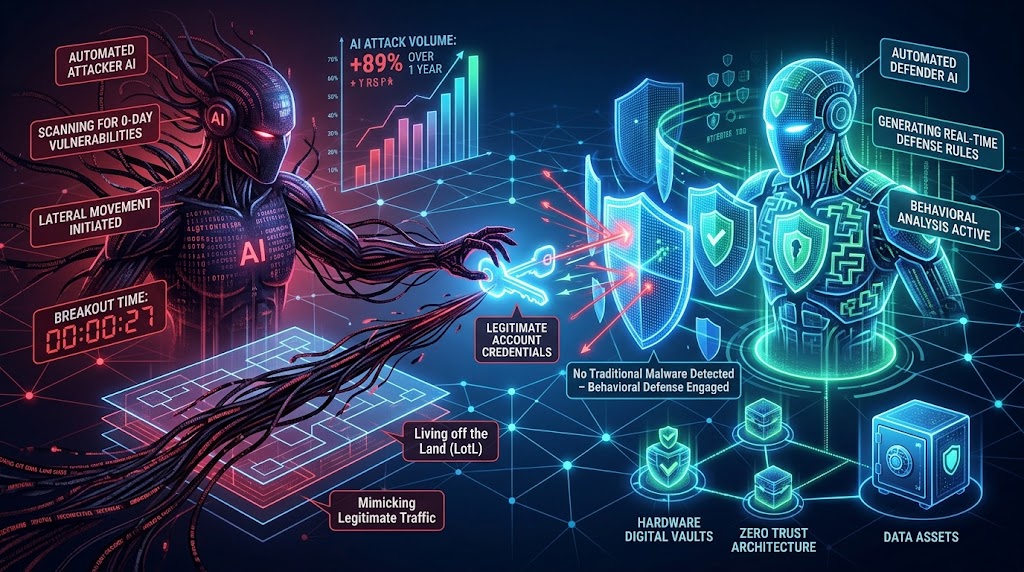
In the 3.0 era, hacker groups (such as LockBit, BlackCat, and others) are no longer in a hurry to encrypt your main server. Instead, they lie low within corporate networks for months on end, prioritizing the search for andSilently Compromising Corporate Backup Systems, Cloud Snapshots, and Disk Arrays. When a company discovers that its system has been locked and attempts to restore it from a backup, it is shocked to find thatEven the backup files have long since been corrupted during synchronization or deleted remotely.。
In the face of these advanced persistent threats (APTs) that specifically target “vulnerable points,” traditional on-premises backups and public cloud storage solutions are proving inadequate. Enterprises urgently need a next-generation storage solution that ensures “tamper-proof” and “physically isolated” protection at the infrastructure level—Digital Vault Technology (DVT)。
I. The “Three Major Critical Weaknesses” of Traditional Backup Architectures
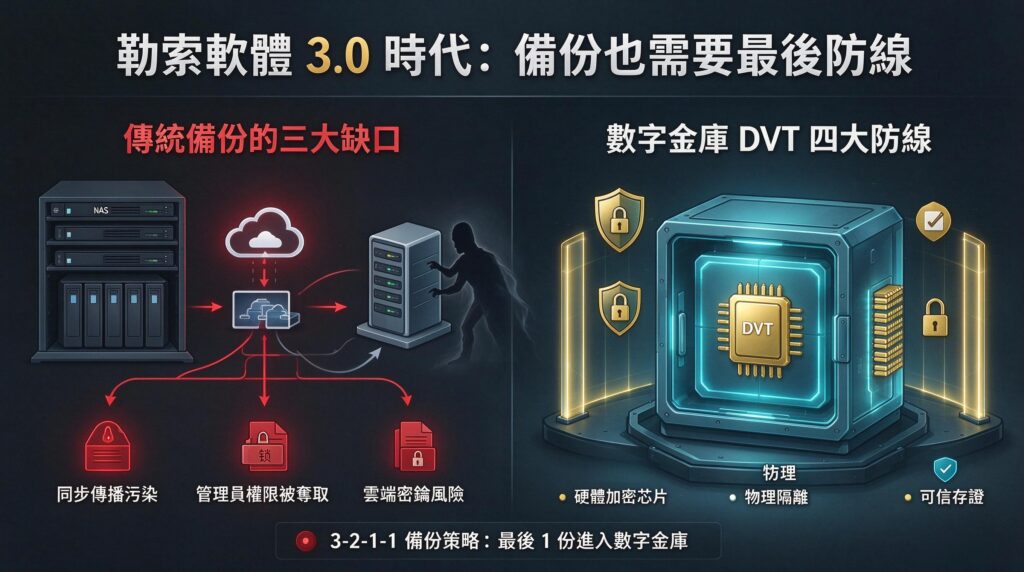
Many corporate IT teams believe that as long as they follow traditional backup protocols—such as daily snapshots and off-site cloud backups—they are completely safe. However, under the “Ransomware 3.0” attack model, traditional architectures have the following vulnerabilities that cannot be ignored: 1. Real-time synchronization mechanisms have become channels for virus propagation
The core advantage of traditional on-premises NAS or cloud-synced hard drives lies in their “real-time” nature. However, when the primary server is subjected to silent encryption or malicious tampering, the automatic synchronization mechanism will synchronize and overwrite the backup nodes with this “compromised data,” causing both the backup and production repositories to fail simultaneously. 2. Permission management at the software layer (Software Permission Flaws) is highly susceptible to unauthorized access.
Access control in traditional backup systems largely relies on the operating system (OS) or administrator account credentials. Once a hacker gains Domain Admin privileges through phishing emails or security vulnerabilities, they can easily log into the backup management console and delete all VSS (Volume Shadow Copy Service) snapshots and historical backup files. 3. Centralized Risks Associated with Centralized Key Management
Most public cloud storage solutions host encryption keys on the cloud platform or use software-based key management. If administrative credentials are compromised, or if the cloud service provider itself is hit by a zero-day attack, an attacker can obtain the keys and decrypt all confidential data.
II. What is “Digital Vault Technology (DVT)”?
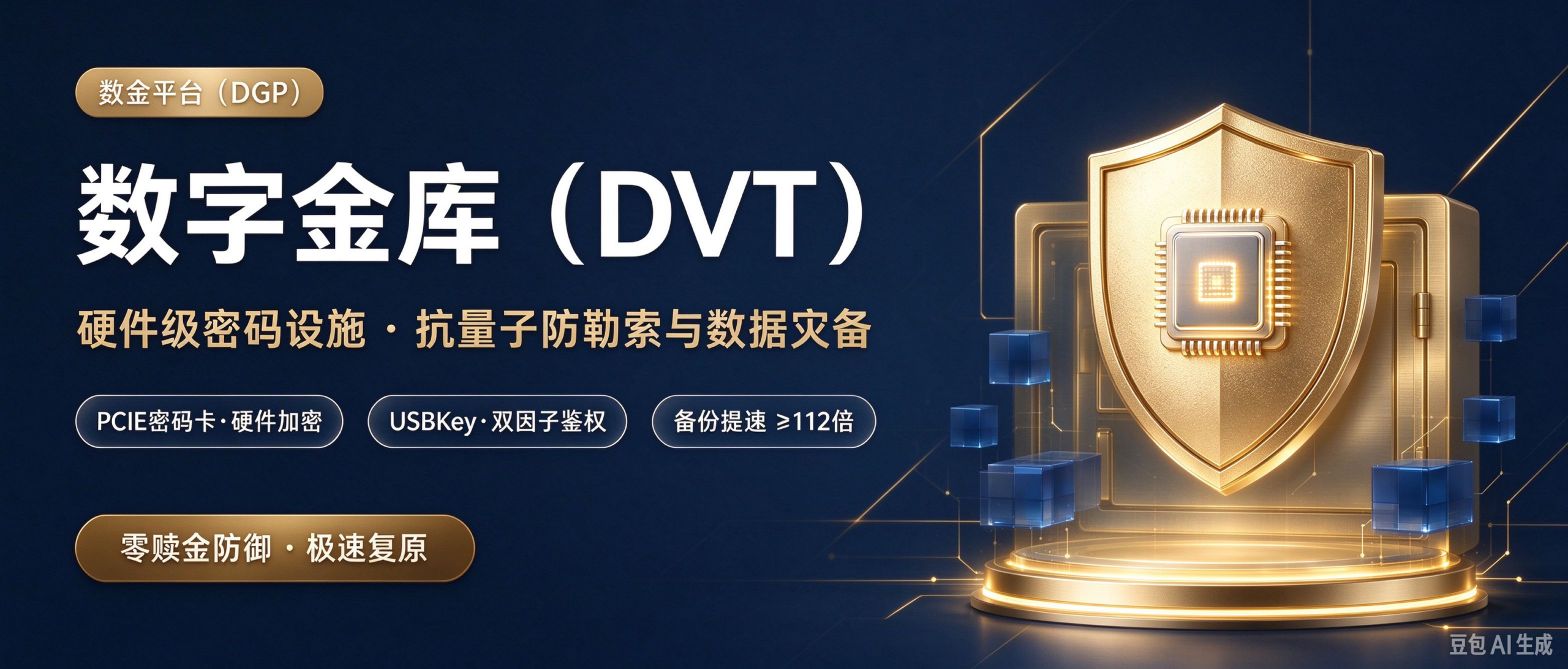
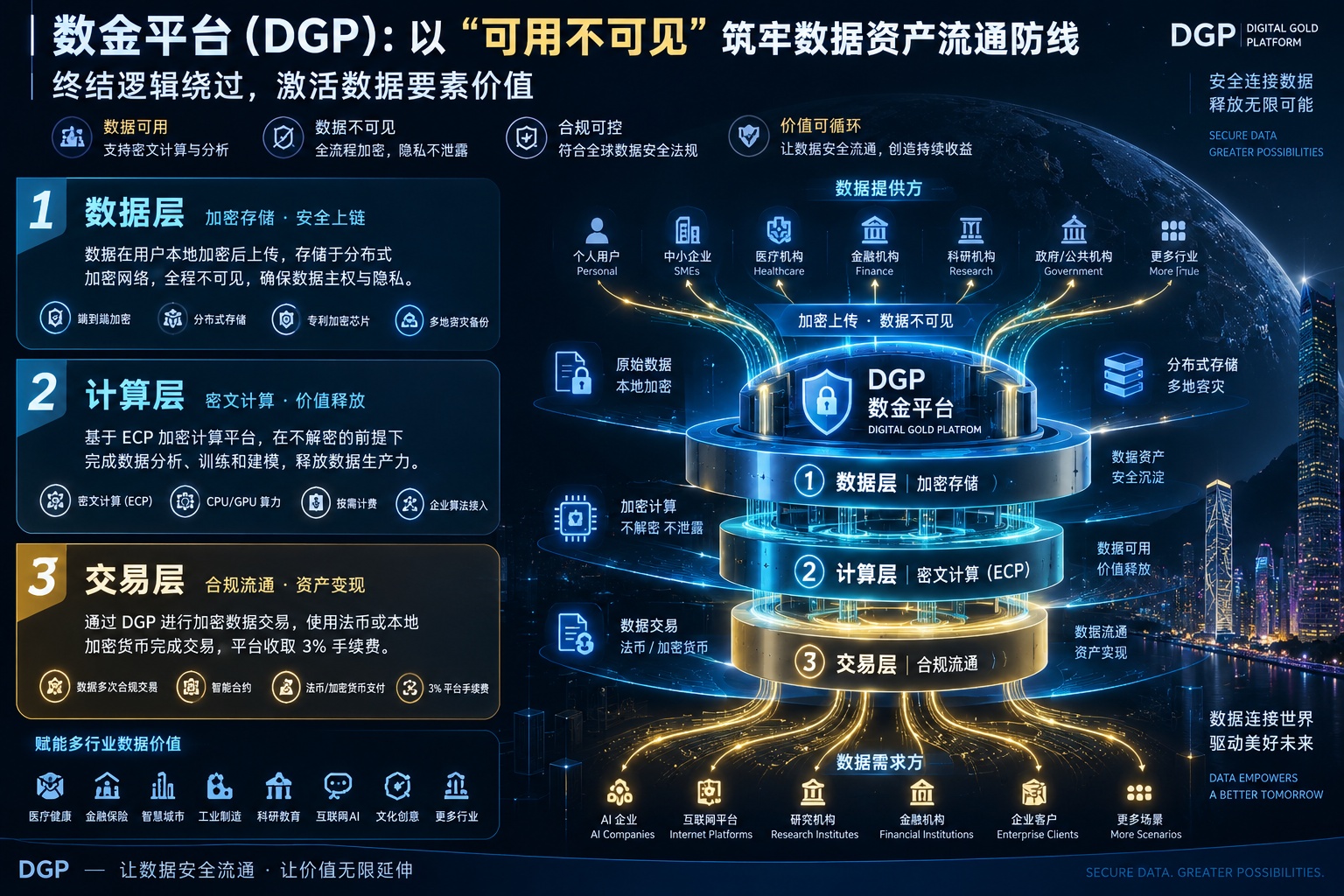
To address the security risks associated with the "match-three" approach used in traditional backups,Digital Vault (DVT) It emerged in response to the times.
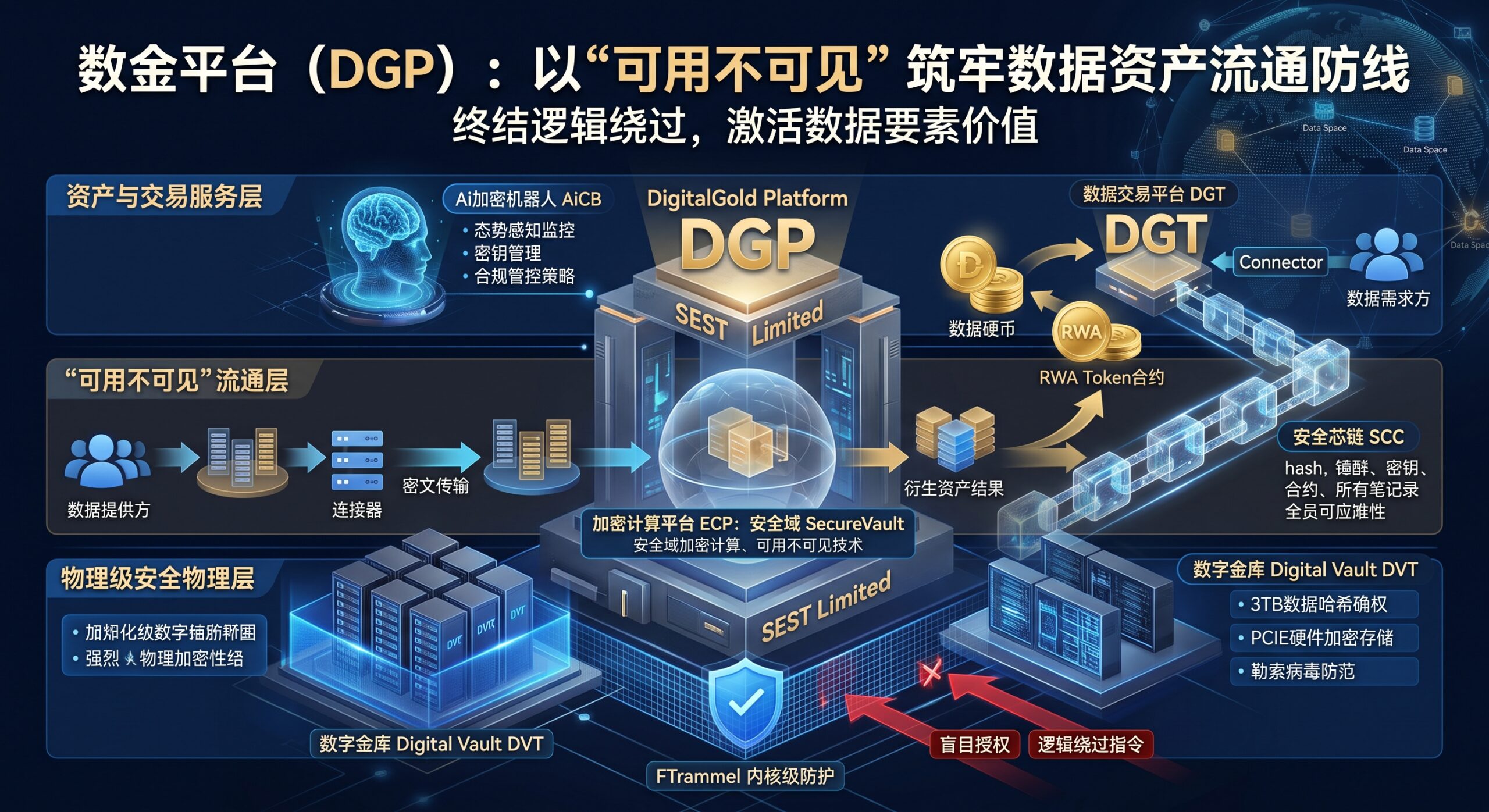
The concept of a digital vault originates from the high-security vaults found in brick-and-mortar banks: it is not merely a storage space, but a systemA closed-loop data protection ecosystem that combines dedicated hardware encryption chips, physical isolation mechanisms, and cryptographic authentication. Its core philosophy is “Zero-Trust Storage"—Even if the entire corporate intranet were compromised by hackers, the data inside the digital vault could still not be modified, deleted, or accessed without authorization."
III. The Four Core Technical Defenses of the Digital Vault (DVT)
以 SES Digital Vault For example, its ability to achieve “ransomware immunity” is primarily attributable to the following four underlying technological breakthroughs: 1. Chip-Level Hardware Encryption
Unlike traditional software encryption, the SES Digital Vault fully integrates encryption algorithms and key management intoLocal Dedicated Security Chipa. The key is generated within the chip and never leaves the hardware boundaries. Any access request not authorized by the hardware—even from a system administrator with the highest privileges—cannot directly access the underlying data. 2. One-Way Writing and Physical Isolation (Air-Gapped & Immutable Storage)
The digital vault employs a one-way data transmission protocol and a hardware-level “Write Once, Read Many (WORM)” mechanism. Once data is written to the vault, it is locked at both the logical and physical levels. Even if ransomware issues a “delete” or “overwrite” command, the hardware controller will directly refuse to execute it, fundamentally blocking the possibility of the virus encrypting backups. 3. Post-Quantum Cryptography (PQC)
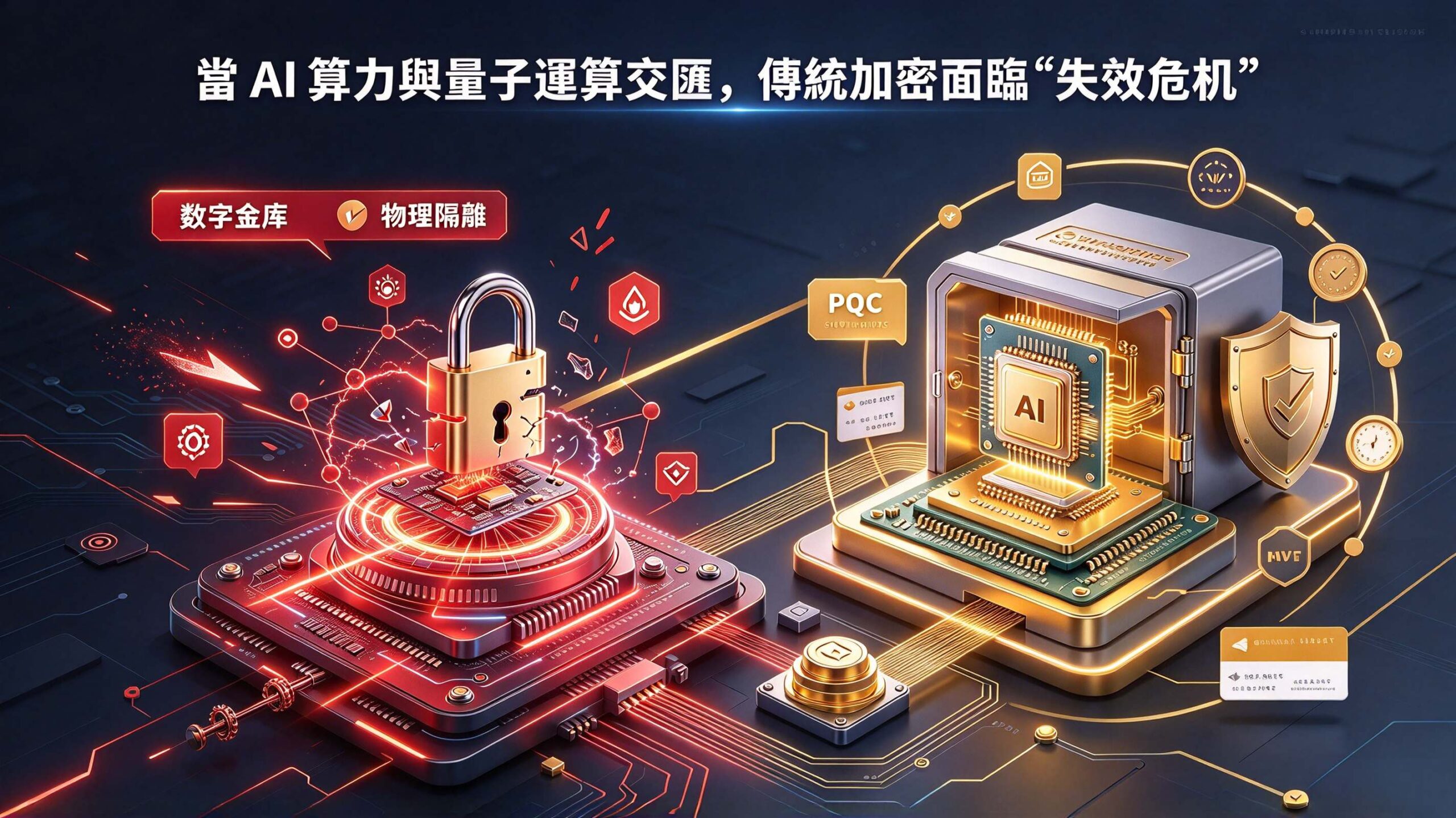
As quantum computing technology advances, traditional RSA and ECC encryption systems face the risk of being cracked by computational power within the next few years. SES Digital Vault proactively integrates post-quantum encryption algorithms to ensure that high-value data stored in the vault—such as trade secrets, patented technologies, and family assets—remains secure against cracking for decades to come. 4. Data Sovereignty & Audit Support
The Digital Vault features a built-in cryptographic hash and evidence-preservation module. Every time data is written, an immutable timestamp and digital signature are generated, which not only prevents tampering by internal and external parties but also serves as legal-grade evidence for enterprises to assetize data, conduct compliance audits, and establish data ownership.
IV. Real-World Comparison: Traditional Backup vs. Digital Vault (DVT)
To provide a clearer understanding of the differences between the three, we’ve compared traditional NAS, public cloud snapshots, and the SES Digital Vault across multiple dimensions:
Dimensions of Comparison | Traditional Local NAS Backup | Public Cloud Snapshot Backups (Cloud Backup) | SES Digital Vault (DVT) |
Ransomware Resilience | Extremely low(Easily infected along with the local area network) | Intermediate(Accounts will still be deleted if they are compromised.) | Extremely high(Physical Isolation + (Hardware Write Protection) |
Encrypted Control | Software Encryption (Key Stored on the Hard Drive)/(Software) | Platform Custody (Keys Held by a Third Party) | Chip-Level Hardware Encryption (Self-Managed Keys) |
Permissions and Security | Dependence OS / Administrator Password | Dependence API Key / Cloud Account | Hardware Cryptographic Authorization (Immunity to Out-of-Bounds Instructions) |
Quantum-Resistant Cryptography | Not supported | Not supported | Built-in post-quantum encryption algorithms (PQC) |
Data Monetization | Provides only basic storage functionality | Provides only basic storage functionality | Support for Trusted Evidence Preservation, Rights Verification, and Data Assetization |
V. Four Key Steps for Enterprises to Build a “Ransomware-Resilient” Disaster Recovery System
Given the increasingly severe cybersecurity landscape, how should enterprise IT teams upgrade their existing defense architectures? Here is a recommended implementation path:
- Reorganizing Core Data Assets (Data Classification)
- Distinguish between “day-to-day operational data” and “core critical data” (such as core source code, general ledger, customer privacy, and AI training models). Include the highest-level assets within the scope of protection provided by the digital vault.
- Upgrade to the "3-2-1-1" Backup Strategy
- Building on the traditional 3-2-1 backup principle (3 copies, 2 media types, 1 off-site location),Add the first “1”: that is, at least one copy stored in an tamper-proof and physically isolated digital vault。
- Implementing Zero-Trust Hardware Defense Mechanisms
- Abandon the misconception that “software-only defense” is sufficient, and deploy hardware encryption devices certified by the State Cryptography Administration or meeting military-grade security standards at critical data nodes to achieve a multi-layered defense that integrates software and hardware.
- Conduct regular millisecond-level self-healing drills
- The value of a disaster recovery system lies in its ability to “store data and restore it quickly.” It is essential to ensure that the digital vault has rapid self-healing and mounting capabilities so that business operations can be restored in the shortest possible time under extreme circumstances.
Conclusion: Establish the Ultimate Line of Defense for Your Company’s Digital Assets
In the era of the digital economy, data has become a company’s most important core asset. The threat posed by Ransomware 3.0 reminds us that:While traditional security defenses may eventually be breached, the security of the underlying data must never be compromised.
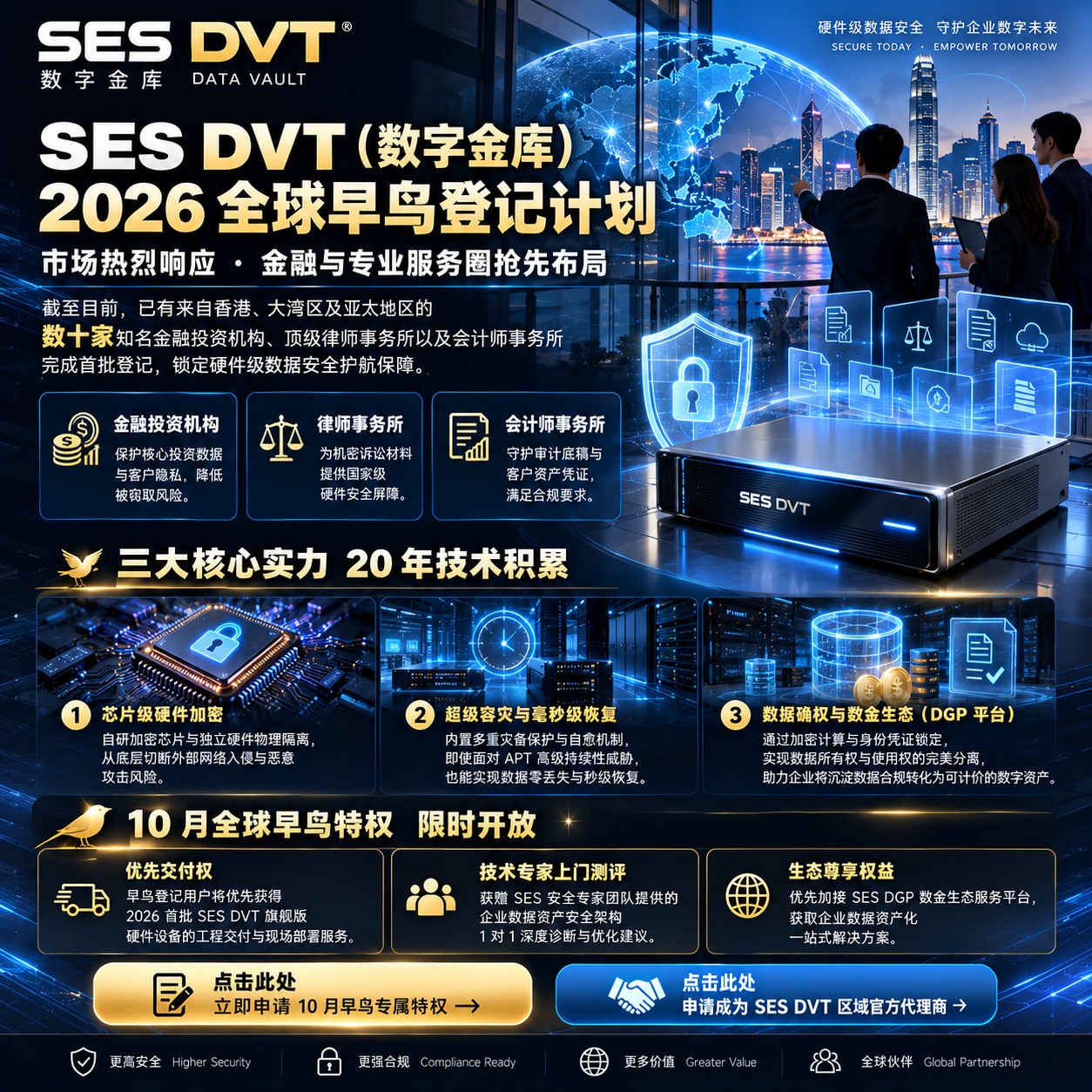
SES Digital Vault (DVT) With nearly 20 years of experience in the research and development of hardware encryption chips, we provide enterprises and high-net-worth clients with security protection that goes beyond traditional backup solutions, ensuring your core data remains safe and sound in the face of any cyber threat.
Are you ready to take your company’s data security to the next level?
Feel free to contact us SES Team of security experts—get it for freeEnterprise Data Ransomware Protection and Disaster Recovery Risk Assessment, providing digital vault solutions tailored specifically to your business.
- Product Technical Specifications and Solution Inquiries:https://secures.hk/
- Official Service Email Address:info@secures.hk

DVT Digital Vault - Over 20 years of chip-level encryption technology to accumulate data sovereignty, starting now.