

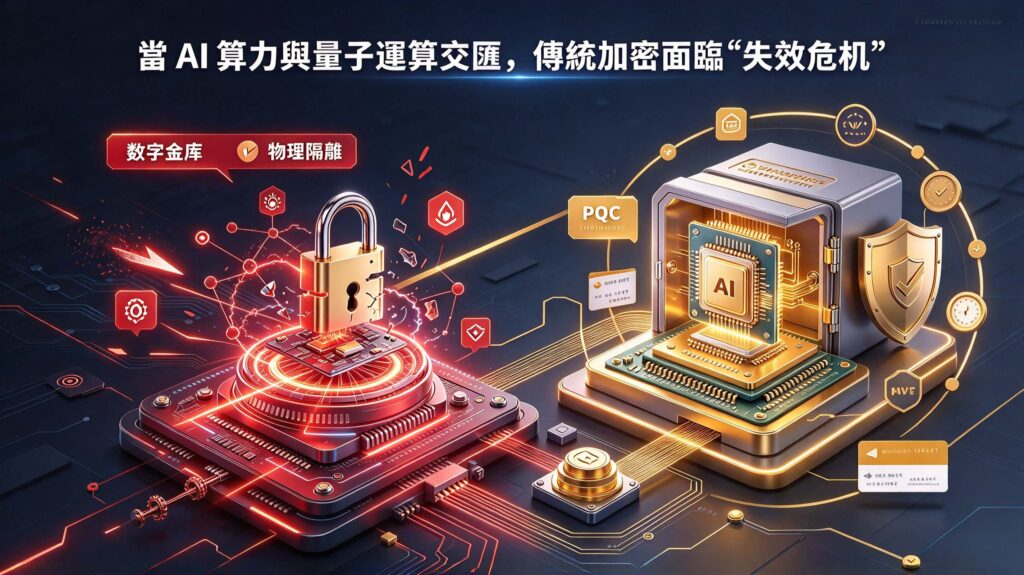
 When AI Computing Power Meets Quantum Computing, Traditional Encryption Faces a “Crisis of Ineffectiveness”
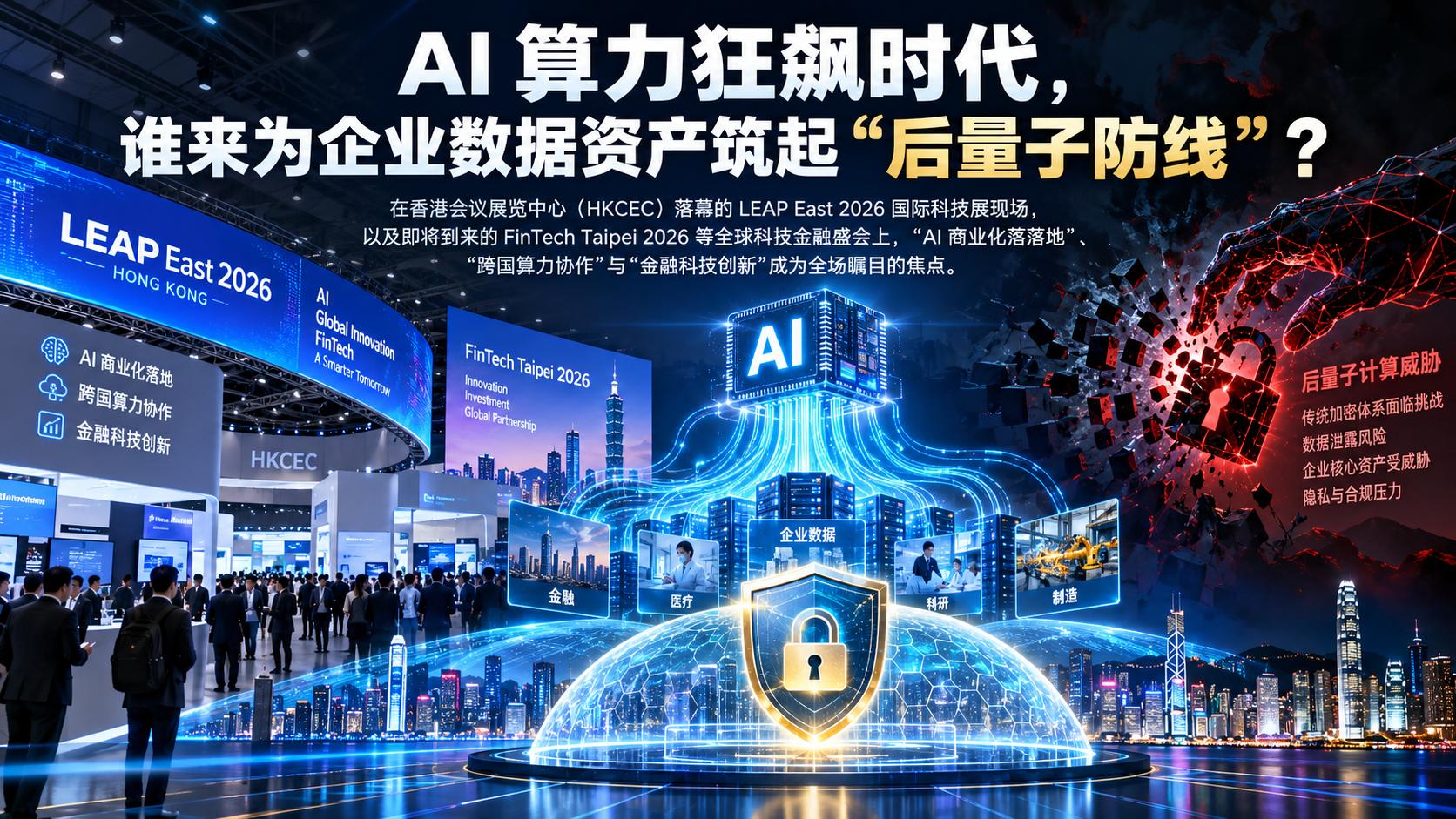
With the widespread adoption of large-scale artificial intelligence (AI) models and rapid breakthroughs in quantum computing technology, the global digital economy is undergoing an unprecedented transformation. Data is no longer merely a record of a company’s day-to-day operations; it has emerged as the fifth factor of production, standing on equal footing with land, labor, and capital.
However, this leap in computing power is a double-edged sword:
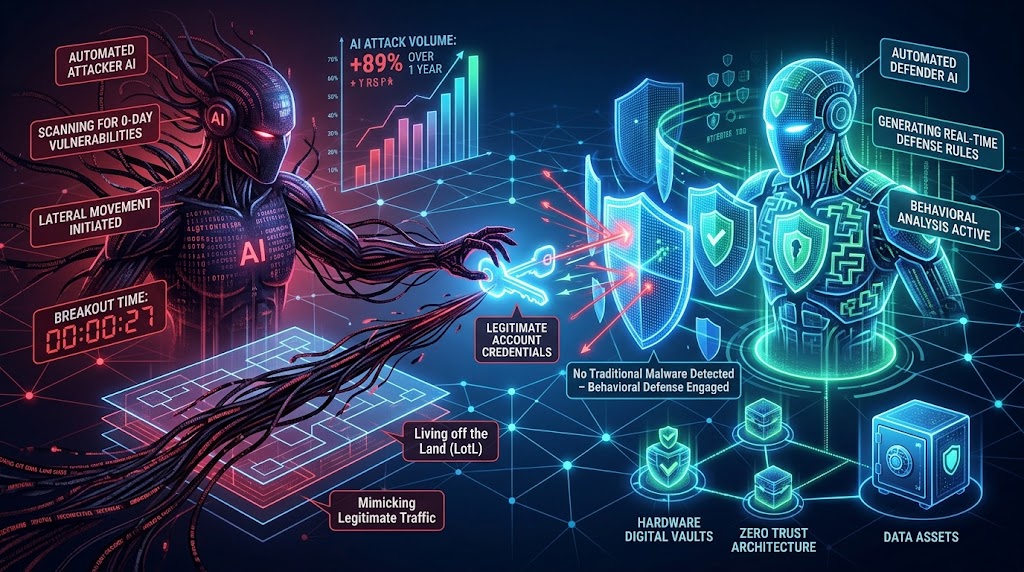
1. AI-Driven Automated Attacks and Defenses: Hacker groups are using AI tools to conduct real-time vulnerability discovery, automated penetration testing, and targeted social engineering attacks; traditional rule-based software firewalls are being easily bypassed.
2. “Harvest Now, Decrypt Later”: Hacker groups and hostile actors are intercepting and stockpiling large amounts of high-value encrypted data from businesses and governments. They are waiting for the day when quantum computers become operational—at which point, mainstream asymmetric encryption algorithms such as RSA and ECC will be cracked in a matter of seconds.
Faced with the dual trends of “computing power-driven attacks” and “the monetization of data,” how should enterprises and high-net-worth individuals rebuild their data security strategies? The answer lies in shifting the security perimeter from the “network perimeter” to **“underlying chips and data sovereignty”—that is, adopting Digital Vault Technology (DVT)**.
I. Why Can’t Traditional Cloud and Software Encryption Meet the Challenges of the Post-Quantum Era?
Many business executives believe that data is secure enough as long as it is encrypted using AES-256 and stored in the public cloud or on private servers. However, in the future landscape of technology, this perception raises three major concerns:
1. The Risk of “Outdated Algorithms” in Software-Level Encryption
Currently, the vast majority of public cloud platforms use encryption protocols that do not incorporate **post-quantum cryptography (PQC)** architecture. Once a commercial breakthrough in quantum computing is achieved, all historically encrypted files stored in the cloud will be as vulnerable as if they were “exposed.”
2. “Loss of Data Sovereignty” in a Multitenant Architecture”
In a public cloud environment, control over data and keys typically rests with the platform provider. When faced with regulatory requests, third-party data scraping, or unauthorized access by internal employees, enterprises cannot achieve absolute control over their data (Data Sovereignty) as defined by the 100% framework.
3. Misappropriation and Tampering of AI Model Training Data
For AI R&D and technology companies, core training datasets and model parameters are the lifeblood of their business. If data is illegally stolen or compromised by adversarial attacks during storage or transmission, the company’s core technological assets will instantly lose their value.
II. From “Cost Center” to “Asset Center”: Assetization of Data and Compliance-Based Rights Clarification
As major economies around the world have successively introduced policies on data ownership and the recognition of data as assets on balance sheets, corporate data security is no longer merely a “protection cost” for IT departments, but rather a “value center” that directly impacts the CFO’s balance sheet and corporate valuation.
To be considered a legitimate, compliant, tradable, and balance-sheet-eligible digital asset, the data must meet three key criteria:
- Traceable Ownership and Origin: Must have an indisputable cryptographic proof of ownership.
- Integrity and Immutability: Data is not tampered with or corrupted throughout its entire lifecycle.
- A Fully Controlled Storage Environment (Secure Vault Infrastructure): Data assets must be hosted separately in a highly secure environment to prevent leaks that could result in significant financial losses.
Against this backdrop, SES Digital Vault (DVT) deeply integrates “underlying hardware security” with “data ownership verification protocols,” enabling enterprises to establish a fully closed-loop process spanning secure storage ➔ cryptographic verification ➔ and asset recognition on the balance sheet.
III. SES Digital Vault (DVT)’s Cutting-Edge Technology: Building a Quantum-Level Firewall
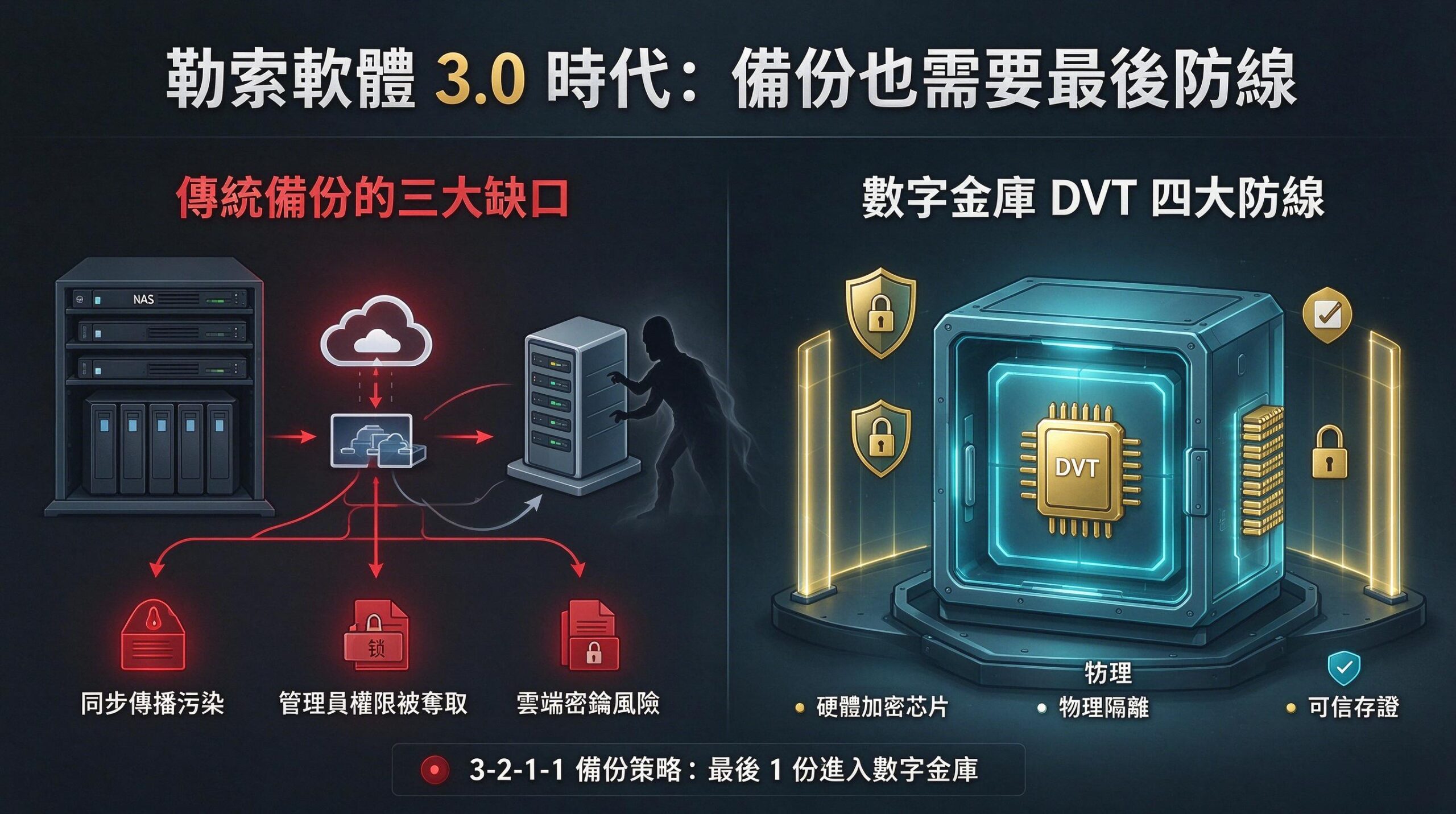
In response to the security challenges and data ownership requirements of the post-quantum era, SES Digital Vault has established insurmountable technical barriers through four key technological innovations:
|
SES Digital Vault (DVT) Core Security Architecture |
|
|
1. Quantum-resistantHardware Cryptography (Hardware) – Keys are generated locally; physically tamper-proof |
2. Post-quantum encryption algorithms (PQC) – Resistant to future quantum computing attacks |
|
3. Zero-Trust Cold Storage (Air-Gapped) – Physical isolation, 100% protection against network intrusion |
4. Cryptographic Authentication and Evidence Preservation (Audit) – Trusted Timestamps and Compliance Reporting |
1. Post-Quantum Hardware Security (Chip-Level Security)
The SES Digital Vault incorporates a proprietary security hardware chip that binds keys to data at the lowest level. The entire encryption and decryption process takes place within the chip, ensuring that keys are never exposed to the operating system or network layer, thereby eliminating any software backdoors.
2. Forward-Looking Post-Quantum Cryptography (PQC)
By establishing post-quantum cryptography standards at the algorithmic level, we can ensure that encrypted data will remain highly secure for the next 30 to 50 years, even in the face of future attacks by quantum computers.
3. Zero-Trust Cold Storage
By employing a dual isolation mechanism—both logical and physical—the system achieves a "no internet connection unless necessary" state for the physical vault. Any unauthorized remote access commands are immediately discarded by the hardware controller, cutting off potential attack vectors for hackers.
4. Trusted Blockchain/Timestamp-Based Evidence Preservation
Every time data is stored or modified, an irreversible cryptographic hash value and timestamp are generated, and a compliance audit report is produced, providing authoritative technical evidence for the enterprise’s subsequent data asset valuation.
IV. Industry Use Cases: Who Needs Digital Vaults the Most?
Different industries have varying priorities when it comes to data security and ownership verification. SES Digital Vault (DVT) primarily serves the following four highly sensitive sectors:
- Industry Sectors: Key Pain Points and Risks; SES Digital Vault Solution
- Finance and Family Offices: High-net-worth asset certificates, cryptocurrency private keys, and family trust documents are vulnerable to theft by hackers. Physical-level cold storage combined with hardware chip encryption provides the ultimate in privacy protection.
- Core model weights, training datasets, and patent source code for AI and cutting-edge technologies are vulnerable to theft or tampering. Chip-level authorized access and physical isolation protect core IP from disclosure.
- Healthcare and Biotechnology: Genetic sequence data and clinical trial results face strict compliance audits and the risk of data breaches. Cryptographic authentication and evidence preservation, combined with zero-trust encryption, meet healthcare compliance requirements for large enterprises and Multinational Trade: Commercial contracts, general ledger data, and sensitive supply chain information are threatened by geopolitical risks and cyberattacks. Deploying on-premises Digital Vault nodes enables autonomous control over data sovereignty.
V. Recommendations for Enterprise Implementation: Building a Data Defense System for the Post-Quantum Era
In light of the increasingly severe cybersecurity landscape, corporate decision-makers should adopt the following phased strategy:
1. Prioritize Asset Risk (Tiered Asset Strategy): Not all data requires the same level of protection. Focus on identifying the company’s Top 5% critical assets (such as core IP, financial ledgers, and private-key certificates) and prioritize migrating them to a digital vault.
2. Deploy PQC-Ready Infrastructure (Quantum-Ready Infrastructure): When planning the IT disaster recovery budget for the next 3–5 years, prioritize storage technologies that support post-quantum encryption and are tied to hardware chips.
3. Complete preparations for data compliance and ownership verification: Utilize the built-in cryptographic evidence-preservation capabilities of the digital vault to organize and verify ownership of the company’s high-value data, laying the groundwork for future compliance in recognizing data as assets on the balance sheet.
Conclusion: Building a Reliable Security Barrier in an Uncertain Digital World
Technological advancement never stops. The advent of AI and quantum computing has brought about a leap in productivity, but it has also introduced unprecedented security risks. In the post-quantum era, traditional software boundaries are no longer sufficient to protect enterprises’ core assets.
Drawing on nearly 20 years of deep expertise in the field of hardware cryptography, SES Digital Vault (DVT) uses chip-level hardware encryption and post-quantum algorithms to build an impregnable digital fortress for enterprises and high-net-worth individuals.
Keep your core data assets rock-solid in the age of AI and quantum computing.
Please contact the SES Security Architects team to schedule a one-on-one presentation and data security assessment.
- Product Technical Specifications and Solution Inquiries:https://secures.hk/
- Official Service Email Address:info@secures.hk

DVT Digital Vault - Over 20 years of chip-level encryption technology to accumulate data sovereignty, starting now.