


In May 2026, five local organizations, including the Hong Kong Polytechnic University, the Hong Kong University of Science and Technology and the Hong Kong Academy for Performing Arts, notified the Office of the Privacy Commissioner for Personal Data (PCPD) of a suspected large-scale intrusion into the Canvas online teaching platform, which is used by more than 9,000 institutions around the world. More thanForty-two thousand.The names and email addresses of PolyU students and staff fell into the hands of hackers overnight.
It's not the technology that's weak, it's the structure that's inherently flawed.
What makes this incident sobering is not the negligence of the institution, but the structural weakness of the entire cloud software encryption model; Canvas is a widely trusted third-party platform, but it has been proven that once data is uploaded to an external server, the user loses ultimate control of the data.
The Honorary President of the Hong Kong Information Technology Federation (HKITF), Mr. Fong Po-keung, has hit the nail on the head: "Even if the core system of an educational organization may not be compromised, the data of students and staff may be leaked if there is a problem with a third-party platform. This is the common dilemma faced by countless organizations around the world - data security has been outsourced.
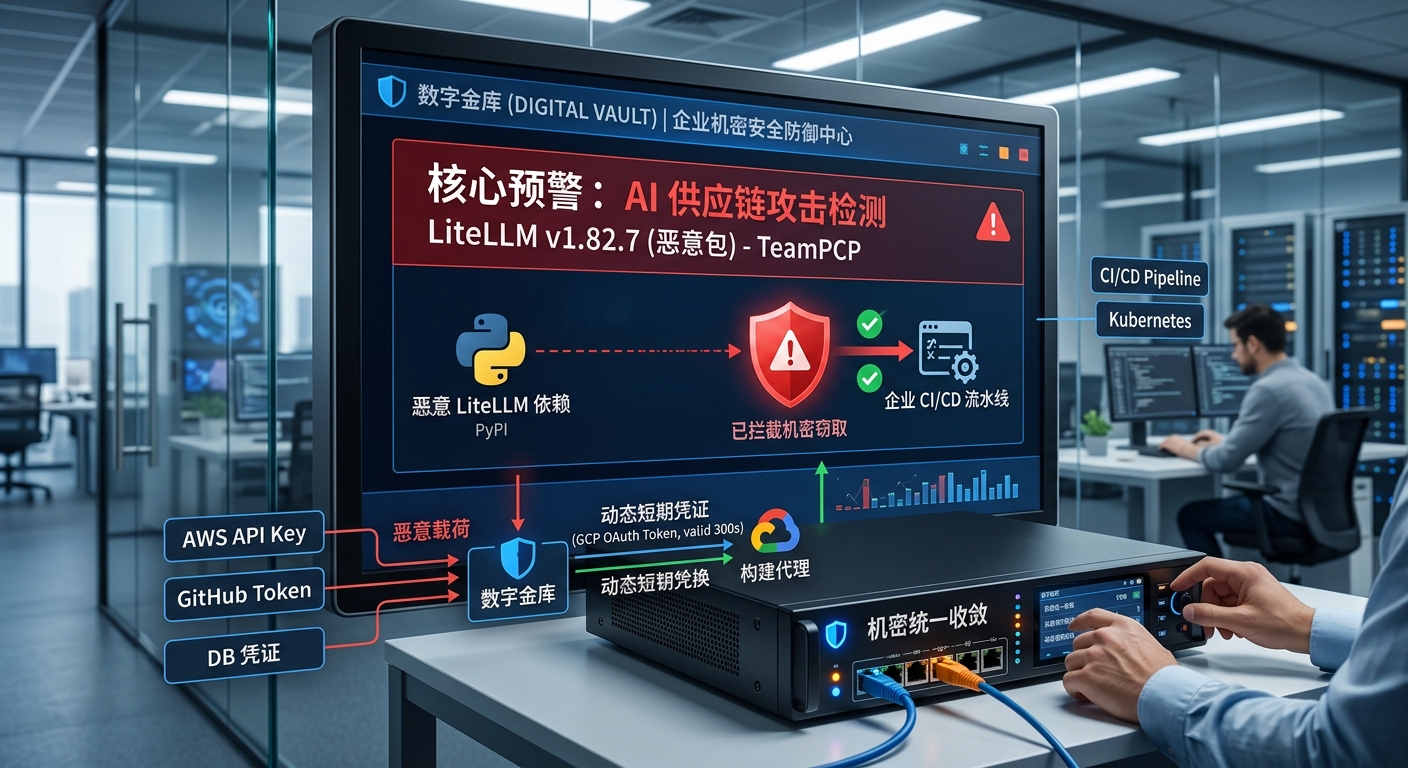
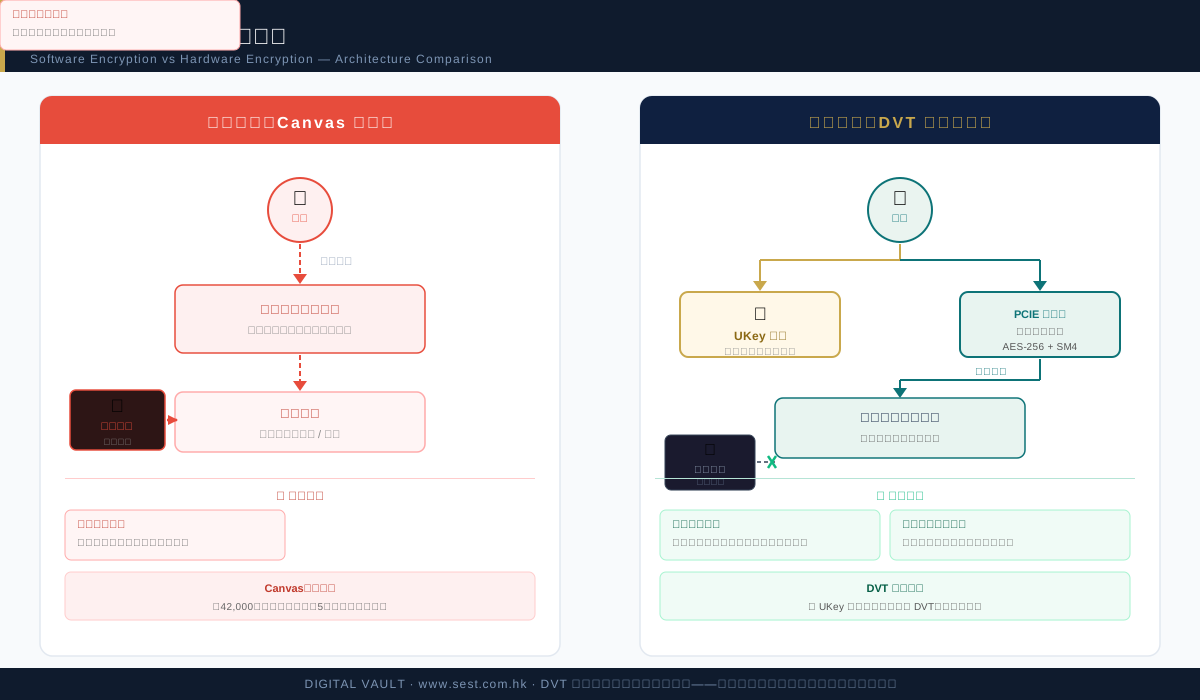
CanvasIt is a typical example of software encryption architecture: plaintext or simply encrypted data is stored on the cloud servers of third-party platforms. When the platform is attacked, the data is leaked. The user has no control over the key and has no idea where the data is going. |
 It's not just names and emails that have been leaked this time.
Some people say, "It's just a name and email, no password, it's not a big deal." However, Fang's warning should not be taken lightly - this information can be used for phishing attacks, impersonation, and even sophisticated fraud. With AI technology nowadays, a name and an email can be used to forge a fake "notice from the university".
Of greater concern is the fact that the incident covered course records, grades and internal communications, and some institutions have yet to "confirm the number of people affected". The true scale of the data breach often does not emerge until after the hackers have begun their activities.
Three Structural Risks Exposed by Canvas Events
⚠ | The cloud is in plain text and the key is not in your hands. The key to the Software Encryption Platform is managed by the Service Provider. In the event of an attack on the service provider or in response to a judicial inquiry, the original text can be read at any time. |
⚠ | Third party risk cannot be verified After handing over the data to the outsourced platforms, the organizations have almost no substantive monitoring capability on their security standards, progress of vulnerability remediation and incident response capability. |
⚠ | Compliance certification is not the same as data security Canvas' parent company, Instructure, holds industry certifications, yet is still being invaded on a massive scale. Compliance is the bottom line, not the ceiling. |
Hardware encryption, the real architectural barrier
The design logic of DVT Digital Vault fundamentally avoids the structural loopholes of the Canvas style. The core concept is a single sentence:The original text is never uploaded, the key is always in your hand.
DVT uses self-developed PCIE cryptographic cards to synchronize the ciphertext to the cloud after the local device has completed the AES-256 and State Secret SM4 dual-standard encryption. What's stored in the cloud is a ciphertext that no one can decipher - even if the server is invaded, what the hacker gets is just a bunch of meaningless random codes.
The safekeeping of the key is accomplished by the physical UKey Secure Shield. Without this physical hardware, no one - including DVT itself - can decrypt your data. This means that even in the event of an intrusion on a third-party platform such as Canvas, there is no way for an attacker to gain access to any usable information.
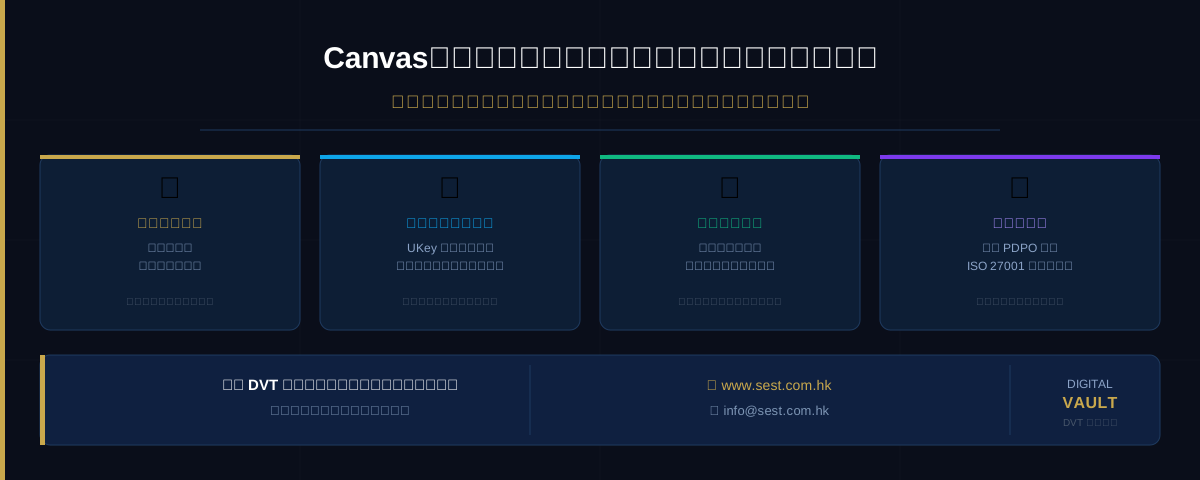
Functional Dimension | DVT Responsiveness of the Digital Vault |
encryption method | PCIE hardware chip encryption, done locally, original text stays in the door |
key control | UKey's secret shield is physically held and protected at the physical level, if you lose your shield, you lose your readings. |
Cloud Storage | Only ciphertext is stored, no data is available even if the server is attacked. |
Compliance Support | Hong Kong PDPO compliance, ISO 27001 certification in progress |
Educational institutions, professionals, you deserve better.
The victims of the Canvas incident were university staff, students, and everyone who trusted the platform. They did nothing wrong, they just used a widely trusted tool. But in the current threat environment, "trusting a third party" is a risk in itself.
In Hong Kong, there are more than 340,000 SMEs, 100,000 high net worth individuals, and 1.6 million professionals such as lawyers, accountants and doctors. These groups are often dealing with business contracts, customer information and financial records that are more sensitive than students' grades. If even universities can't protect students' email addresses, what reason do we have to believe that putting core corporate data in a software-encrypted cloud will be safe and sound?
The Canvas incident is not a case, but a signal. The answer to data security lies not in choosing a more reliable third party, but in eliminating the possibility of "third parties being able to read your data" from the architecture.
That's the whole point of hardware encryption.
Source:HK01, 8 May 2026, "Suspected attack on Canvas, an online teaching platform, PCPD receives notification of data leakage from 5 local organizations". This article is for reference only and does not constitute legal or financial advice.
Contact us:www.sest.com.hk | info@sest.com.hk

DVT Digital Vault - Over 20 years of chip-level encryption technology to accumulate data sovereignty, starting now.